

How AI Try-Ons Help You Plan Real Outfits Before You Buy
I recently attended the Hue & Stripe Fashion Stylist Conference in Dallas, and since I was going to be surrounded by 100+ other stylists, business owners, and very well-dressed people, I knew I could not just toss a few shirts into a suitcase and hope for the best.
Actually, I could have. But as a personal stylist, that would have been rude to the plot. So I treated myself like a White Shoe client.
I built a Pinterest board. I thought through the setting. I considered the Dallas heat, the aggressively cold Texas indoor air conditioning, the conference schedule, the walking, the daytime sessions, and the evening events. I also gave myself a clear style direction: soft resort tailoring with a wink.
Think relaxed trousers, open collars, knit texture, woven shoes, warm neutrals, and just enough personality to feel like me. Not “I own a villa.” More “I packed a linen blend and made a dinner reservation somewhere beautiful and along the ocean.” From there, I shopped and styled the outfits first. Then I used the AI try-on mockup tool to see the full looks together before I packed them.
That distinction matters. AI did not shop these looks. AI did not style these looks. I did.
The AI mockups helped me preview the outfits I had already created, which is exactly why I’m excited to use this tool with my White Shoe clients. It is not a replacement for personal styling. It is a visualization tool that can make the online styling process feel clearer, more confident, and a lot more fun.
AI mockups are now available in select higher-touch White Shoe styling packages, and this trip was the perfect chance to show how they work in real life.
First, I Started With Inspiration
Before I pulled specific pieces, I started the way I often ask clients to start: with visual direction.
For this trip, I was drawn to soft resort tailoring: easy silhouettes, open collars, textured shirts, relaxed trousers, and pieces that felt polished without getting too serious.
That inspiration board helped me notice patterns:
soft creams, browns, olives, and black
relaxed trousers instead of narrow fits
knit polos and camp shirts
open collars
loafers, sandals, and huaraches
outfits that felt easy but still styled
That’s one of the biggest benefits of the styling process. We are not just picking random pieces because they are cute. We are building a visual direction first, then using that direction to make smarter shopping decisions.
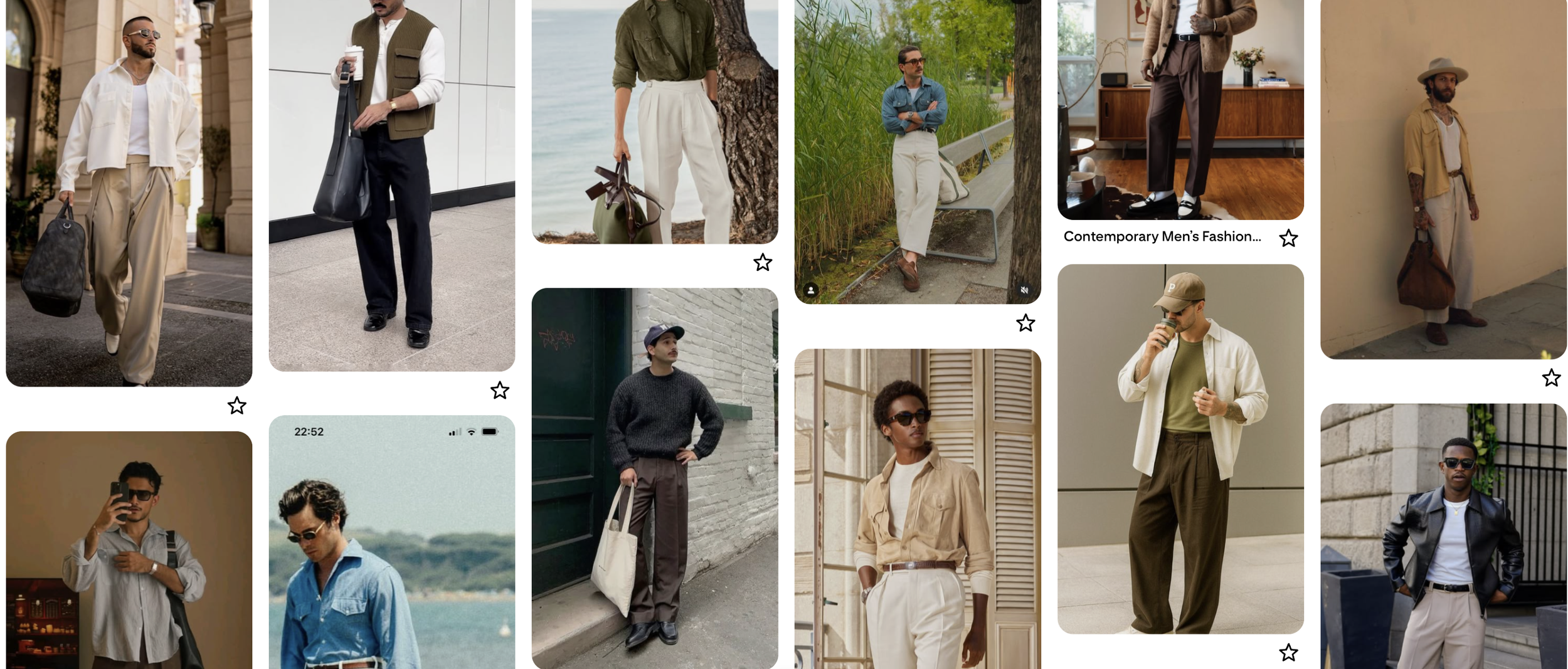
Pinterest board with men’s resort-inspired outfits, relaxed tailoring, cream trousers, knit shirts, and neutral styling inspiration.
Why AI Try-Ons Are Helpful in Virtual Styling
One of the hardest parts of shopping online is that product photos only tell you so much.
A shirt might look great on the model. A pair of trousers might seem interesting on the hanger. A shoe might feel like it fits the vibe. But until you see the pieces together, on a body, in an outfit, it can be hard to know whether the look is going where you want it to go.
That’s where AI try-ons become useful.
They help you preview the idea of an outfit after the styling direction has already been created. In this case, I had already shopped and styled the looks. The AI mockups helped me see everything together before the real-life try-on.
The AI version is not always exact. Sometimes an item sells out. Sometimes the final piece is slightly different. Sometimes the proportions shift once the real garment is on your actual body.
But that’s also the point: AI is not the stylist. It is a tool.
The styling still comes from the strategy — the inspiration, the proportions, the outfit formulas, the lifestyle needs, the event context, the fit decisions, and the final edits.
Day 1: Look 1 Stylist Excursion
The first day included a stylist excursion focused on learning how to build relationships with boutiques, so I wanted something casual, walkable, and realistic for Dallas weather.
The AI mockup gave me a simple preview of the full outfit I had planned: dark tee, light pleated shorts, a belt, and sandals. Easy. Casual. Warm-weather friendly. Still intentional.
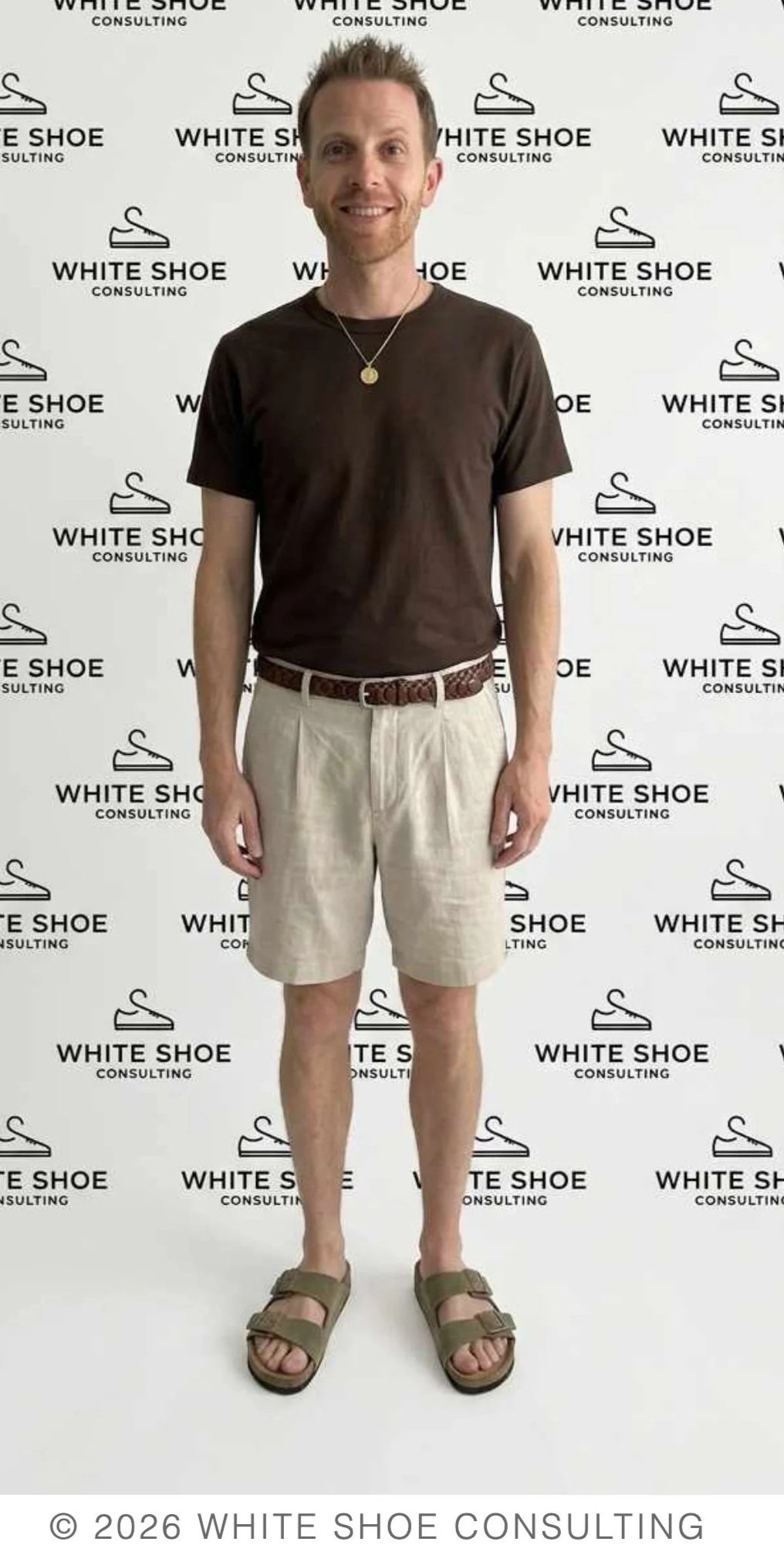
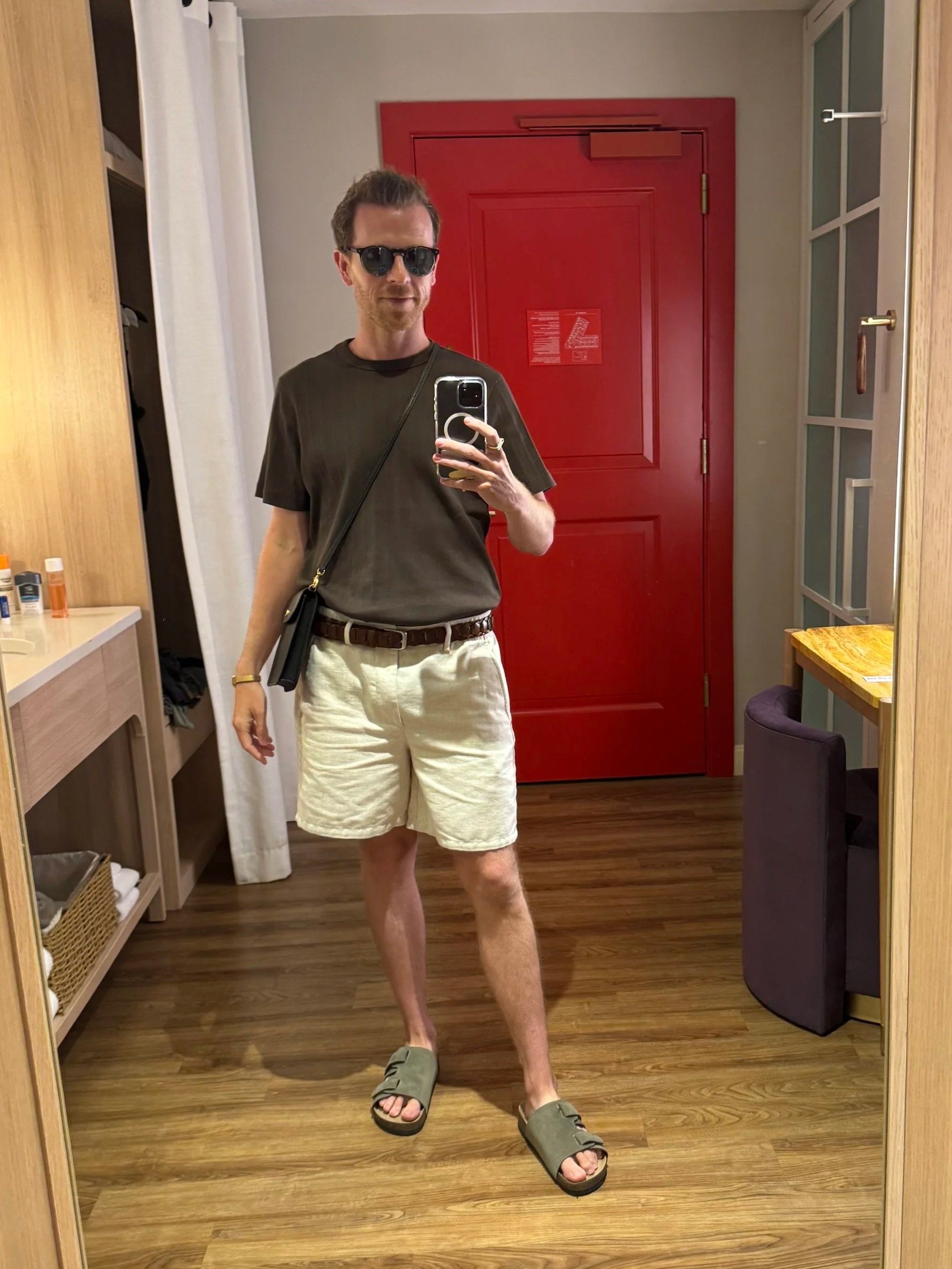
The AI mockup helped confirm the casual direction, and the final look kept it easy, walkable, and Dallas-weather approved.
The final version stayed very close to that idea. I wore a dark tee tucked into light linen shorts with a woven belt, green sandals, sunglasses, and a crossbody bag.
This is a good example of how styling does not always need to be complicated. The proportions did the work: a clean tucked tee, a defined waist, relaxed shorts, and accessories that made it feel finished.
Day 1: Look 2 Opening Social
That evening was the opening social, and the prompt was to showcase our signature style. No pressure. Just a room full of stylists casually observing everyone’s outfit choices. Very relaxing. Totally normal.
For this look, I wanted the soft resort tailoring direction to come through more clearly. The AI mockup showed the outfit direction with a cream camp shirt, green trousers, a tan belt, and woven shoes. The final shirt changed because the original reference piece sold out, which is a very real part of online styling.
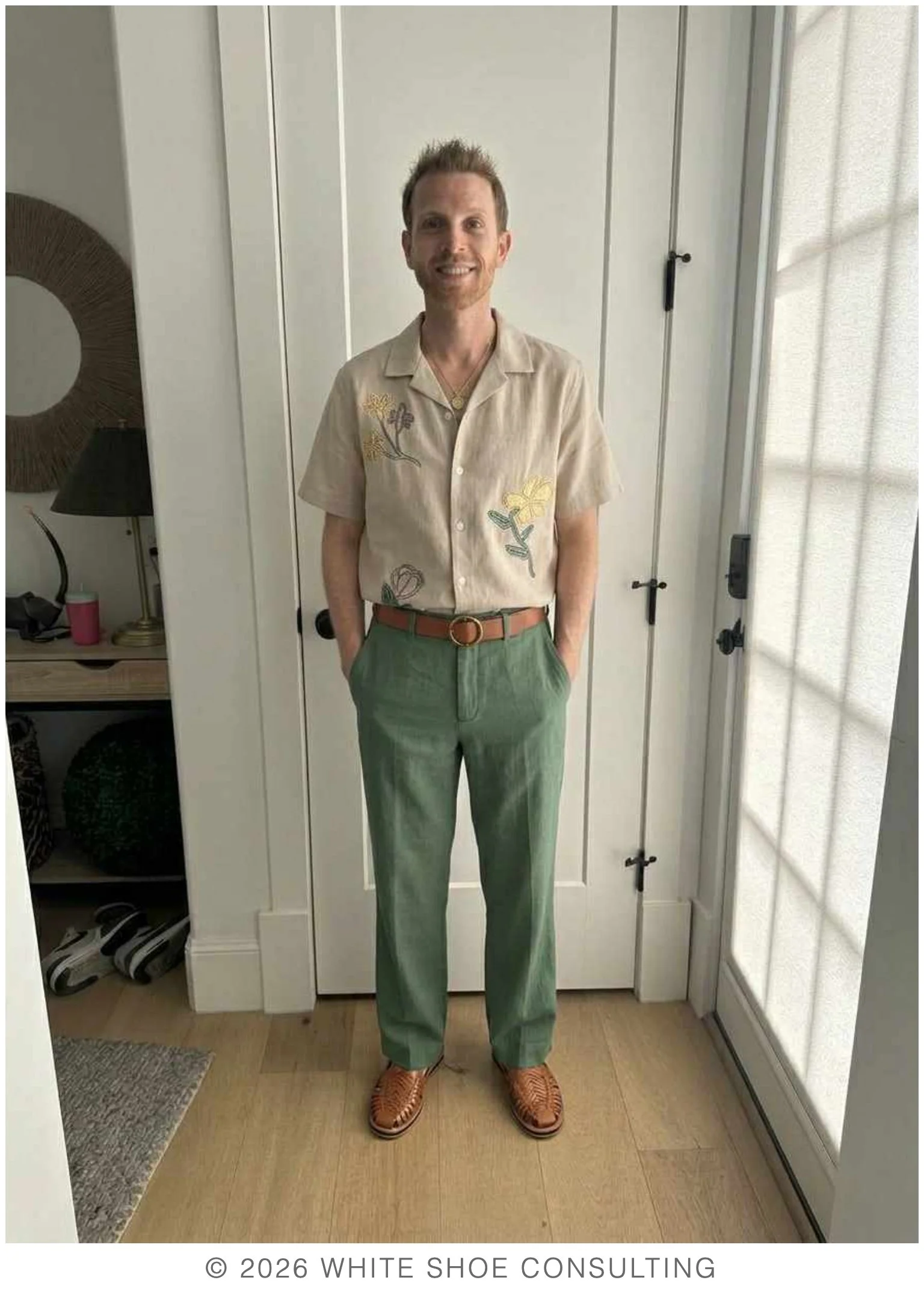
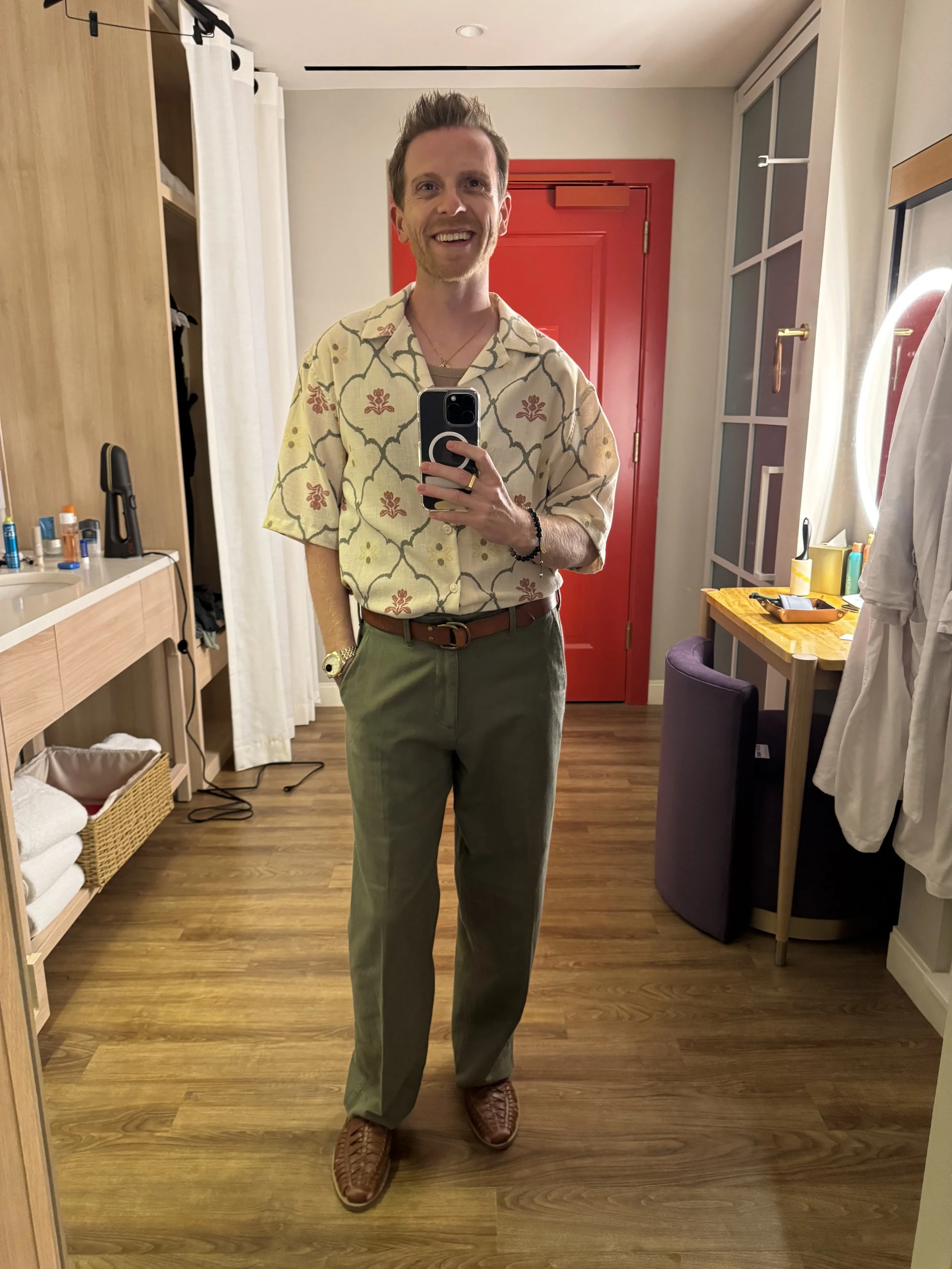
The exact shirt changed after the original sold out, but the styling direction stayed intact.
This happens with clients, too. Sometimes a piece disappears before we can grab it. That does not mean the whole look falls apart. It means we preserve the styling direction and find the next best piece.
The final shirt had a more graphic pattern, but it still delivered the same overall feeling: relaxed, warm, a little playful, and polished enough for an evening event.
Day 2: Look 1 Conference Day
Day 2 was the first official day of the conference, which meant I wanted to look professional, stylish, and comfortable enough to sit, walk, network, and absorb a lot of information.
Also, Texas air conditioning is not here to make friends.
So I wore a textured knit polo with wide-leg black trousers and black slide penny loafers. The knit added warmth indoors, the trousers gave the outfit ease and movement, and the loafers kept everything elevated without feeling too formal.
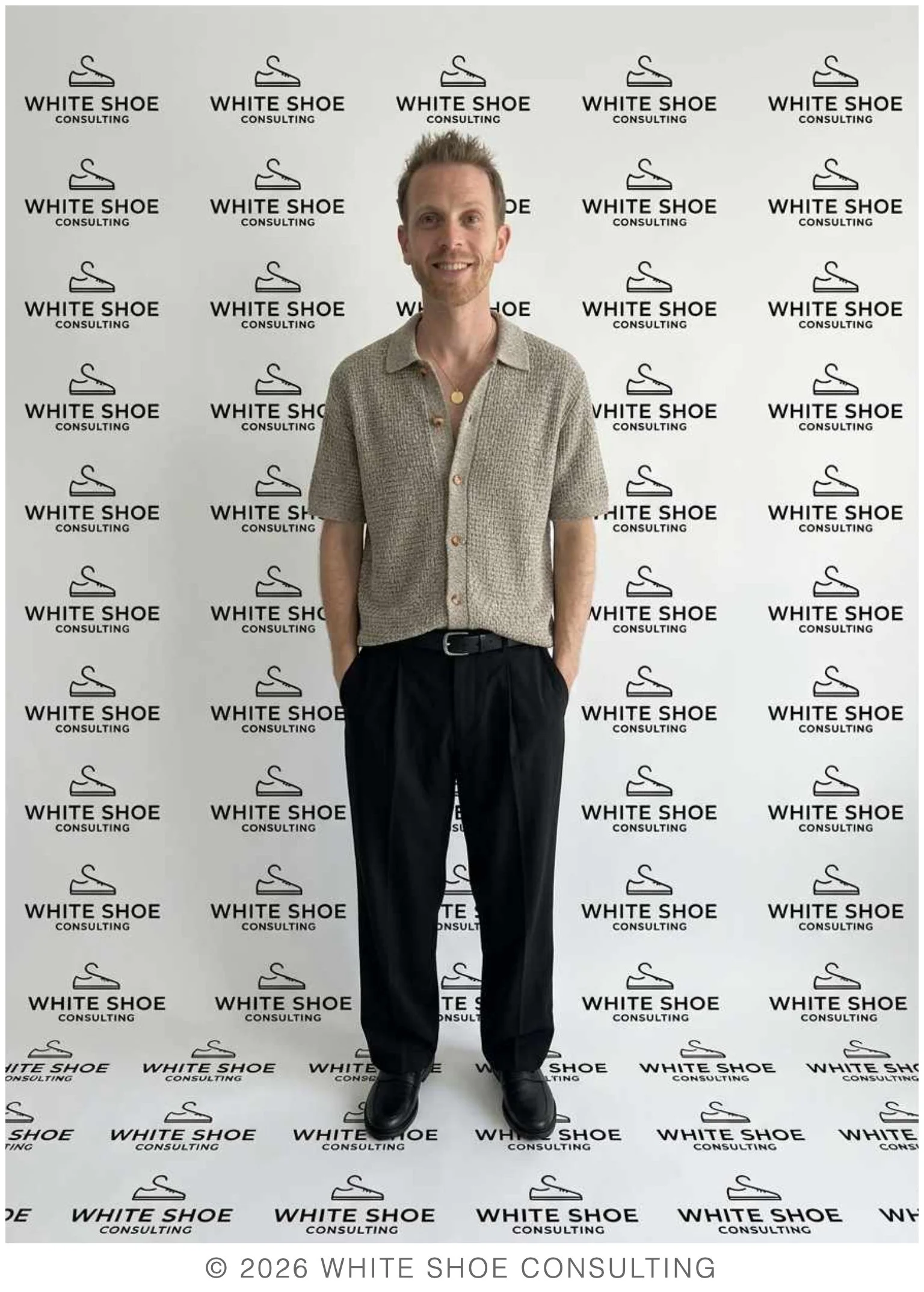
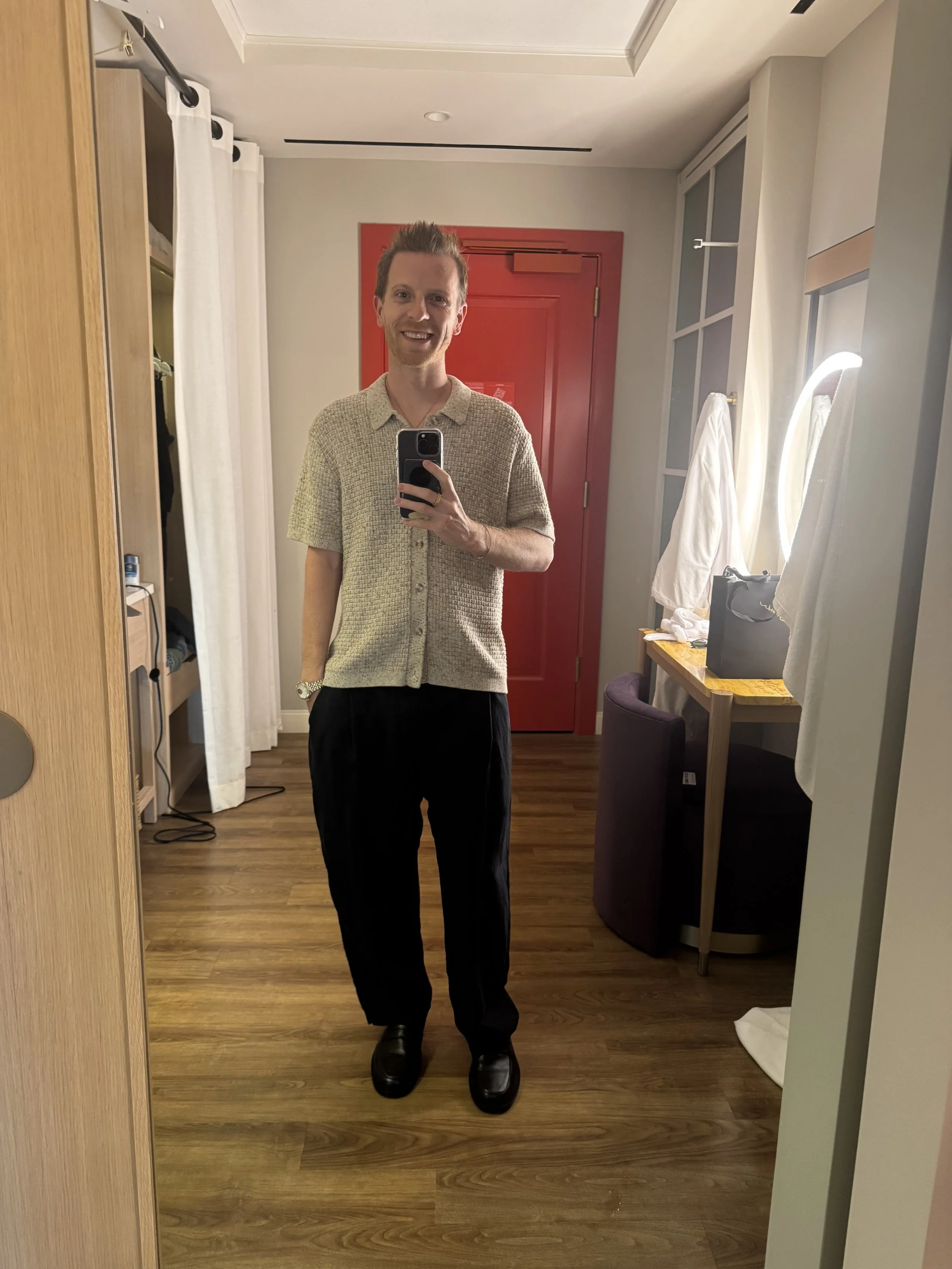
Comfortable, warm enough for conference-room AC, and elevated with wide-leg trousers and black penny loafers.
This was one of those outfits that felt simple but considered. The texture of the knit mattered. The shape of the trousers mattered. The loafers mattered. None of the pieces were screaming for attention, but together they created a clear point of view.
That is a huge part of what I help clients with: making outfits feel intentional without making them feel overdone.
Day 3: Look 1 Daytime Look
For Day 3, I wore a green camp shirt with loose brown trousers and huaraches.
This outfit leaned into the relaxed side of the inspiration board. The camp shirt gave the look personality without feeling loud, the brown trousers softened the outfit, and the huaraches kept the warm-weather feeling going.
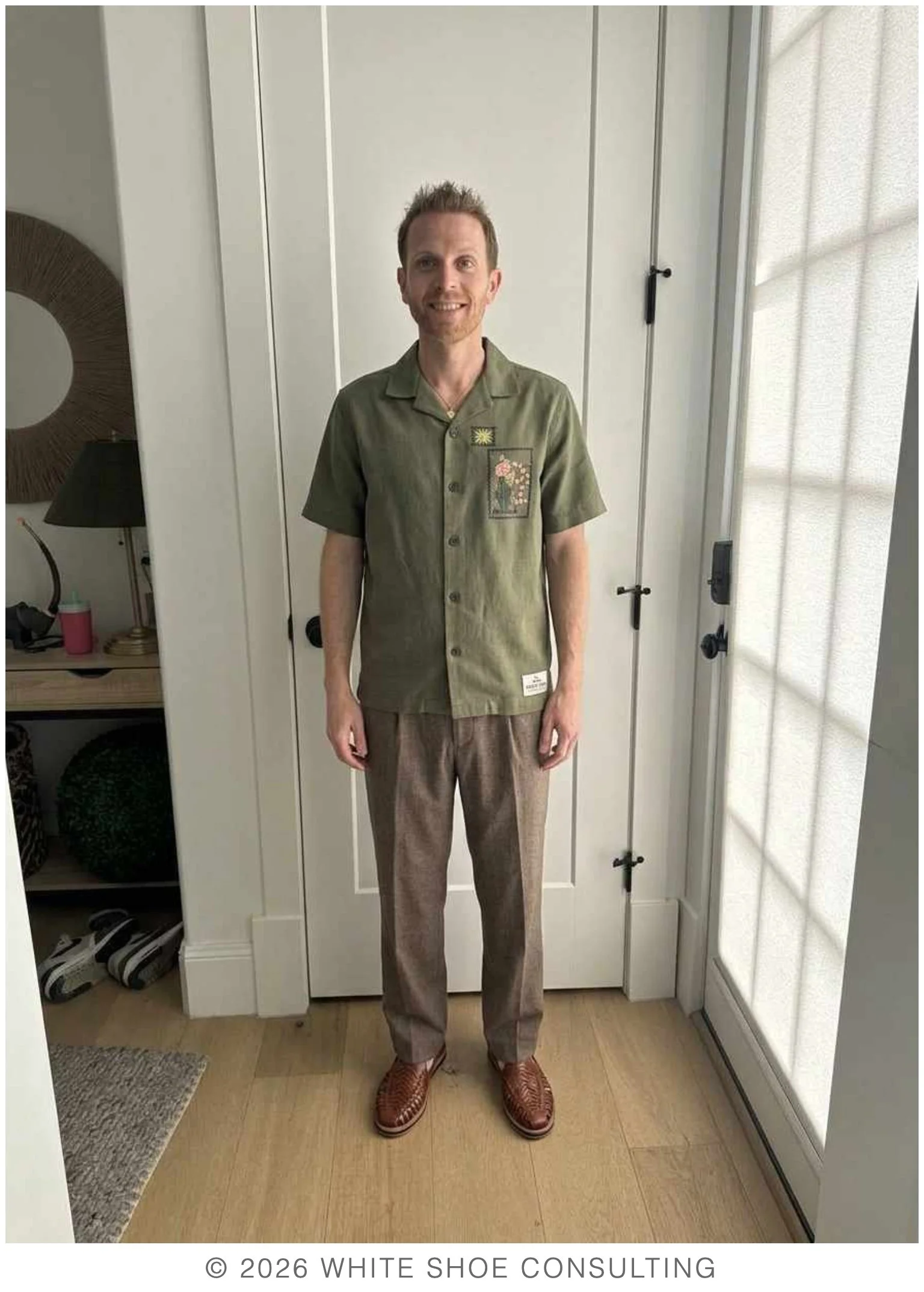
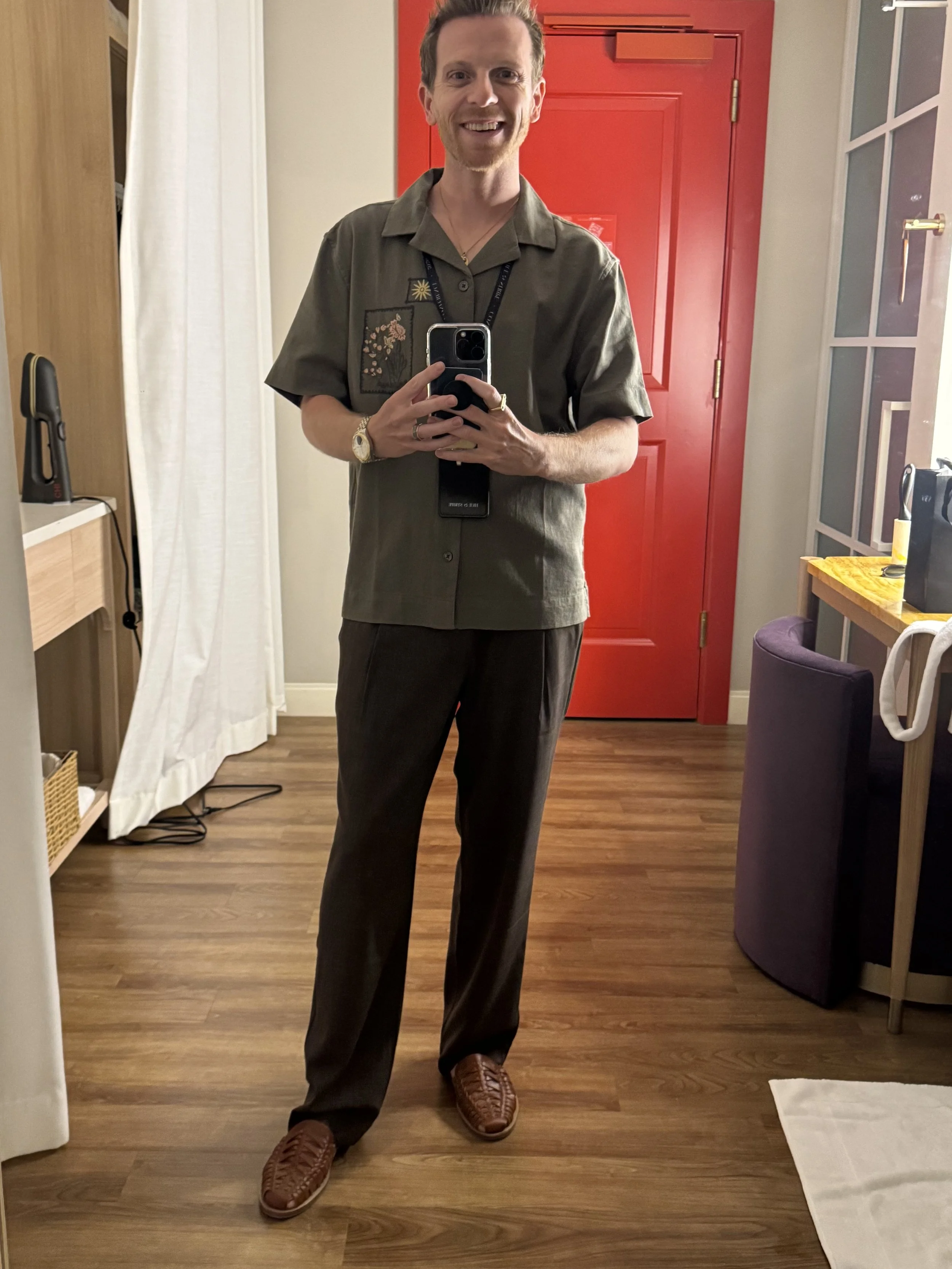
Relaxed, earthy, and comfortable, with a camp shirt, loose trousers, and huaraches.
I also liked that this outfit did not rely on a blazer or a traditional “professional” formula to feel styled. Not every polished outfit needs a jacket. Sometimes the right shirt shape, trouser drape, and shoe choice can do the job.
For a lot of clients, this is where styling gets fun. Once we know the rules that help you look put together, we can start bending them in ways that still feel practical.
Day 3: Look 2 Closing Night
The closing ceremony called for dressing to the nines.
So I decided to be brave.
I wore a sequined double-breasted blazer shirt tucked into high-waisted black pleated trousers with a wide leg. I finished the look with penny loafers and added a silver metal belt for an extra hit of shine.
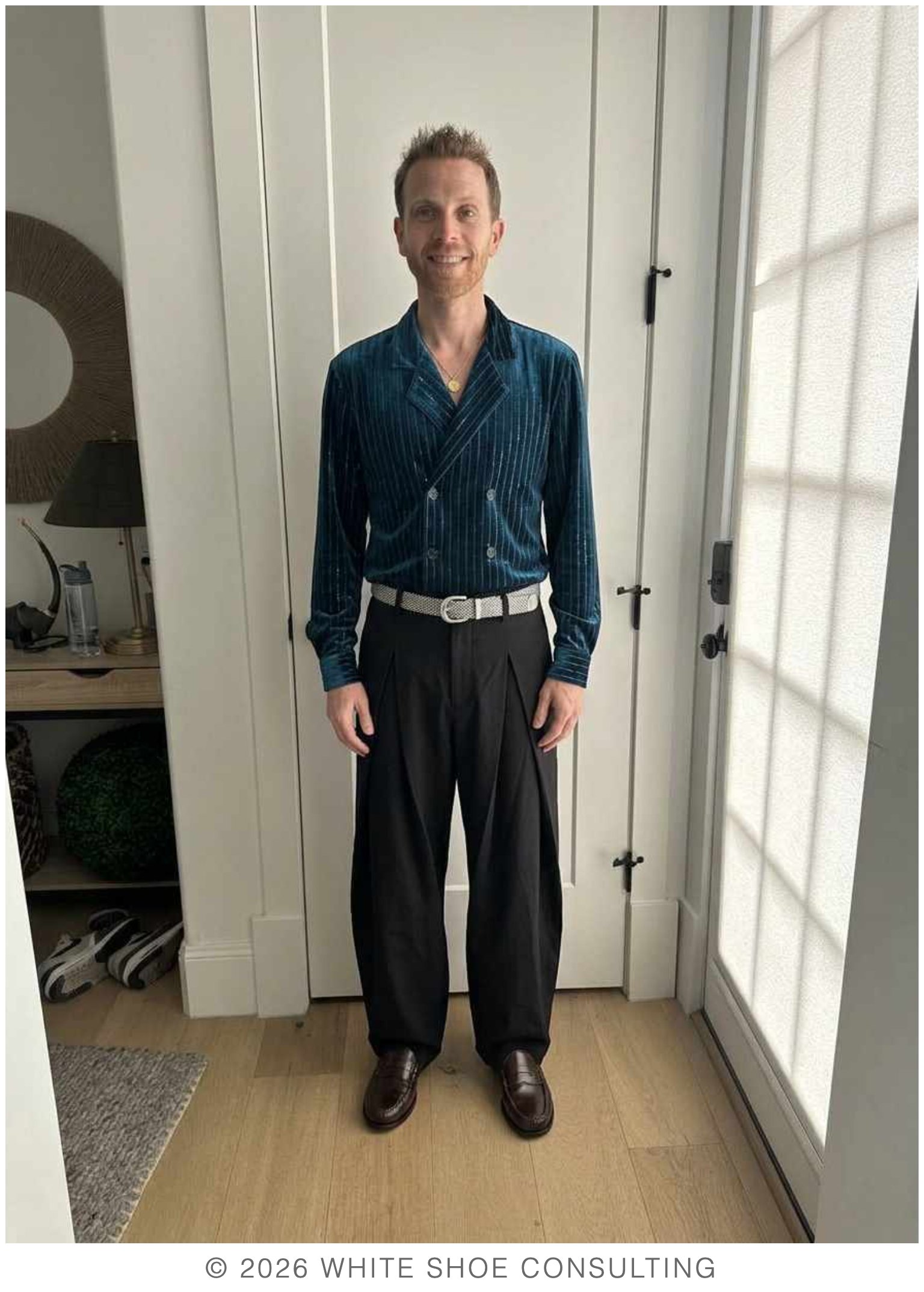
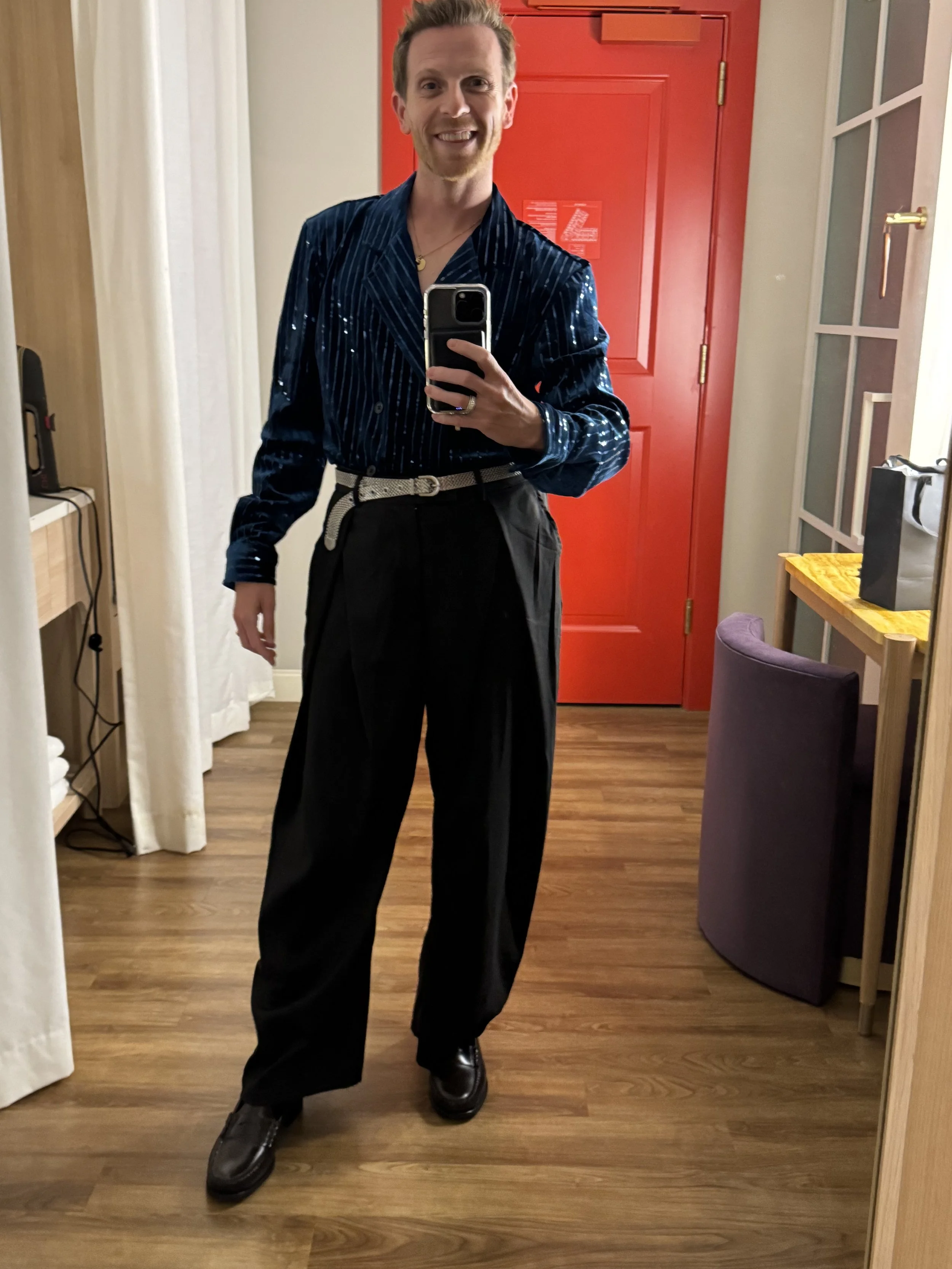
The AI mockup gave me the confidence to go bold, and the final look delivered the drama.
This was absolutely the boldest look of the trip. It pushed me outside of my normal comfort zone, but in the best way. I felt great in it, and I got compliments all night.
That is the part I wish more people understood about style. The right outfit is not just about being “fashionable.” It can change how you carry yourself. It can help you step into the room differently. It can make you feel like the version of yourself you are becoming.
And yes, sometimes that version is wearing sequins.
The AI mockup helped me see the concept first: the dark statement shirt, the dramatic trousers, the belt, the loafer. The final look was even better in real life because the texture, shine, and movement came through more clearly once I actually wore it.
What This Shows About Virtual Styling
This conference wardrobe was a fun personal example, but it also shows how the White Shoe process works for clients.
We start with context.
Where are you going? What do you need to dress for? What climate are you in? What do you want your clothes to communicate? What feels like you? What feels like the next version of you?
Then we build a direction.
That might include Pinterest inspiration, style words, wardrobe gaps, lifestyle needs, outfit formulas, and shopping priorities.
Then we create looks.
Inside the White Shoe client portal, clients can review curated shopping selections, styled outfits, and final lookbooks. AI mockups can help bring those looks to life visually once the styling direction has been built.
The AI is exciting, but the real magic is the process around it. Because an AI mockup without strategy is just a picture.
A styled look with strategy is a wardrobe starting to work harder for you.
AI Try-Ons Are Not Perfect — And That’s Okay
One thing I want to be clear about: AI try-ons are a visualization tool, not a promise that every garment will fit exactly like the image.
Real clothes still have fabric, construction, stretch, drape, sizing quirks, tailoring needs, and the occasional “why did this brand do that?” moment. That is why styling does not stop at the mockup.
The final decision still comes down to the actual pieces, how they fit, how they feel, and how they work with the rest of your wardrobe. But as a preview tool? AI try-ons are incredibly helpful. They can help you understand the direction, get excited about the look, compare options, and feel more confident before buying.
And for virtual styling, that is a big deal.
Want to Try AI Styling Mockups for Yourself?
If you have ever struggled to picture how online pieces will actually come together — or if you know your wardrobe needs a refresh but you do not want to keep guessing your way through purchases — this is exactly what White Shoe Consulting is built for.
I help clients build wardrobes that fit their real life, body, budget, and goals. The goal is not to make you someone else. The goal is to help you dress more intentionally as the person you are becoming.
Curious what this could look like for your wardrobe? Explore the styling packages or book a free 20-minute consultation to talk through what kind of styling support makes the most sense for you.
